
In the disability sector, a support provider is often judged solely by the hours delivered on the ground. But behind every successful support shift, every goal achieved, and every crisis successfully navigated is a factor that often goes unseen: clinical oversight and frontline backing.
Across the NDIS landscape in South Australia, many support workers operate in isolation. They are matched with participants, sent out into the field, and left to navigate complex behavioral, emotional, and practical challenges with very little ongoing professional support.
At BeaconRise Disability Support, we believe that leaving frontline staff without a professional safety net is a disservice to both the worker and the participant. That’s why we embed mandatory, structured, and paid Clinical Supervision into the foundation of our service model.
Here is a look at why clinical governance matters, how our supervision framework operates, and what it means for Adelaide families and Support Coordinators.
The Hidden Gap in Disability Support
Supporting individuals with complex needs, Autism, psychosocial disabilities, or trauma histories requires far more than just showing up. It requires continuous reflection, emotional regulation, proactive risk management, and alignment with the NDIS Code of Conduct.
When support workers are isolated:
-
Small changes in a participant’s well-being can easily be missed.
-
Support strategies can become stagnant or turn into “mindless supervision” rather than active capacity building.
-
Workers face higher rates of burnout, leading to high staff turnover and broken consistency for participants.
To deliver true quality, frontline care must be actively guided by qualified clinical leadership.
How Supervision Works at BeaconRise: Our 3-Pillar Framework
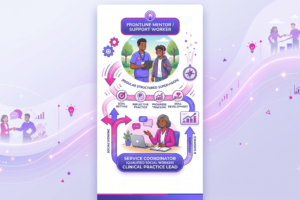
Our Practice Leadership model ensures that every Support Worker and Mentor on our team is continuously supported, mentored, and audited by our Service Coordinators—who are all qualified Social Workers—and our Clinical Practice Lead.
Frontline Mentor / Support Worker
       ▲
       │  (Regular Structured Supervision)
       ▼
Service Coordinator (Qualified Social Worker) / Clinical Practice Lead
1. Reflective Practice & Skill Building
Supervision sessions are not administrative check-ins; they are dedicated spaces for reflective practice. Supervisors work directly with staff to:
-
Review progress toward participant goals and adapt support strategies dynamically.
-
Navigate complex behaviors and sensory needs using trauma-informed and neuroaffirmative approaches.
-
Reinforce strict adherence to safeguarding, participant dignity, and the NDIS Code of Conduct.
2. Dynamic Frequency Tailored to Need
Governance isn’t a “one-size-fits-all” annual review. Our supervision schedule is dynamic and tailored to the experience of the worker and the complexity of the participant’s support needs:
-
New or Less Experienced Staff / High-Complexity Care: Receive fortnightly or monthly structured supervision.
-
Experienced Staff / Standard Support: Engage in bi-monthly or quarterly in-depth reviews.
Because supervision is a mandatory pillar of professional practice, all supervision time is fully paid by BeaconRise. We invest directly in our team so they can invest fully in our participants.
3. Digital Accountability & Auditing
To maintain a transparent, auditable trail, every single supervision session is documented using our standardized internal framework and uploaded directly to the employee’s profile on ShiftCare. This ensures that clinical notes, goal adjustments, and safety plans are centrally logged, monitored, and compliant with NDIS Human Resource Management standards.
What This Means for Families
For families, putting the care of a loved one into someone else’s hands requires immense trust. Knowing that your support worker is backed by a clinical team provides essential peace of mind:
-
A Reliable Safety Net: You aren’t just getting one worker; you are getting an entire clinical ecosystem monitoring your loved one’s progress and safety.
-
Consistent Care: Paid supervision reduces worker burnout, leading to lower staff turnover and long-term, stable relationships.
-
Early Problem Solving: Changes in health, behavior, or routine are caught early by supervisors before they turn into major challenges at home.
What This Means for Support Coordinators
Support Coordinators spend far too much time managing reactive crises caused by uncommunicative or unsupervised providers. Partnering with a practice-led provider changes the equation:
“When frontline workers receive structured social work supervision, small issues are resolved internally before they ever land on a Support Coordinator’s desk.”
-
Less Crisis Management: Proactive safety planning and clinical oversight keep complex cases stable.
-
High-Quality Reporting: Because our supervisors audit shift notes and progress regularly, our NDIS plan review reports are accurate, evidence-based, and aligned with participant goals.
-
True Accountability: Transparent, auditable compliance standards give you total confidence when making referrals.
Elevating the Standard of NDIS Care in South Australia
At BeaconRise, our core RISE values—Reliability, Integrity, Safeguard, and Empowerment—are not just words on a poster. They are active practices driven by structured clinical governance.
By stepping beyond “just filling hours” and investing heavily in frontline supervision, we ensure that every shift delivers real connection, safety, and measurable progress.
Ready to partner with a practice-led NDIS provider?
Whether you are a family seeking reliable support or a Support Coordinator looking for a capable partner in South Australia, we are here to help.
-
🌐 Explore Our Services: beaconrise.com.au
-
📞 Call Our Team: (08) 7070 8683
-
📩 Submit a Referral: https://beaconrise.com.au/referral/